
Signs your home's air quality needs attention
If you smell smoke indoors with the windows closed, see dust come back within days of cleaning, or notice a musty smell when the system starts, your HVAC system is moving unfiltered air through the house.
- Smoke smell indoors on smoky days, even with doors and windows shut.
- The filter turns dark gray in a few weeks, or there's a dark outline of dust around the filter edges, which shows air is going around it.
- Dust settles on furniture quickly and there's dark streaking around supply registers.
- A musty smell when the system kicks on. Possible sources are a wet coil or drain pan, mold on the blower wheel, or a return duct pulling crawlspace air.
- Allergy or breathing symptoms that are worse indoors than outside.
- Stuffy, stale air in a newer, tightly built home, which often means the ventilation fan isn't running or isn't set correctly.
- Whistling at the return grille, which means the filter is too restrictive for the opening.
How to filter wildfire smoke out of indoor air
Most of the harm in wildfire smoke comes from fine particles (PM2.5), small enough to reach deep into the lungs. 4 things work against them:
- A MERV 13 or better filter in the HVAC system, which captures a large share of fine smoke particles. Typical 1-inch fiberglass or MERV 6 to 8 filters let most of them through.
- Running the fan continuously during smoke events, so air keeps passing through the filter even when the system isn't heating or cooling.
- Sealed return ducts, so the system isn't pulling unfiltered attic or crawlspace air in behind the filter.
- Cutting off outside air during smoke: windows closed, whole-house fans off, and fresh-air dampers or ventilation systems set to minimum or recirculation as the equipment allows.
A portable HEPA air cleaner in the bedroom adds a clean room for sleeping. Avoid ozone-generating "purifiers." California restricts their sale because ozone is itself a lung irritant.
Upgrading to MERV 13 without hurting your system
A dense filter in a slot built for a thin one creates a real problem: the blower can't pull enough air through it. With an air conditioner, low airflow freezes the evaporator coil.
With a furnace, it overheats the heat exchanger and trips the high limit switch. Either way, the system ends up needing AC repair or furnace repair it didn't need before.
The usual fix is a 4-inch or 5-inch media filter cabinet at the furnace or air handler. The deeper, pleated filter has several times the surface area of a 1-inch filter, so it catches fine particles without choking airflow.
When the return is undersized to begin with, adding a second return or enlarging the return grille may also be needed. Before and after the upgrade, a technician measures static pressure to confirm the blower is working within its range.
Return duct leaks: the hidden smoke path
The return side of the duct system is under negative pressure. Any gap in a return duct running through the attic, crawlspace, or garage pulls air in from that space, and that air enters after the filter if the leak is downstream of it. On smoky days, that means attic air full of smoke.
On normal days, it means insulation fibers, dust, and in crawlspaces, damp air and odors. Sealing return leaks with mastic, re-hanging sagging flex duct, and sealing the filter rack itself often does more for indoor air than a better filter alone. Our ductwork repair page covers testing and sealing in detail, and if smoke residue is already in the ducts, see air duct cleaning.
Ventilation in newer, tighter homes
Homes built to recent California energy code are built tight and are required to have mechanical ventilation, usually a continuously running exhaust fan or a dedicated fresh-air system. That's good for everyday air quality, but those systems bring in outside air.
During heavy smoke, set them to their minimum or turn them off until the air clears if the equipment allows, then turn them back on. If you don't know what your ventilation system is or how to control it, have it identified during a maintenance visit.
Fire season in Santa Rosa and your HVAC system
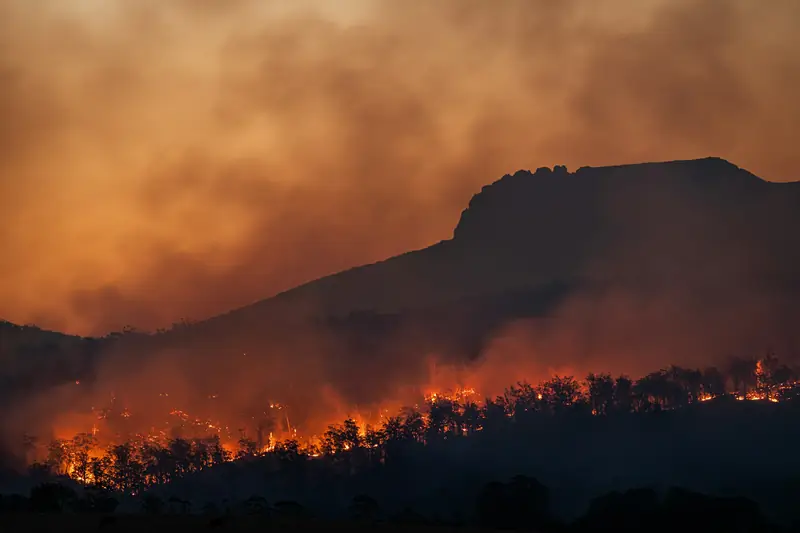
Santa Rosa has been hit directly by wildfire: the 2017 Tubbs Fire burned into the city, and the 2020 Glass Fire burned on its east side. Beyond those, smoke from fires elsewhere in Northern California has covered the city for days at a time in several recent fire seasons. During those stretches, outdoor air quality can fall into ranges where health officials advise everyone to stay inside.
Staying inside only helps if indoor air is cleaner than outdoor air. In a house with a 1-inch fiberglass filter and leaky attic returns, it often isn't by much. The useful steps happen before fire season starts:
- Upgrade the filter rack to a media cabinet that takes MERV 13, if the system needs it.
- Have the return ducts checked and sealed.
- Keep 2 spare filters in the garage, since stores sell out during smoke events.
- Learn how to switch the fan to "On" and how to set any fresh-air or ventilation system to minimum.
After a smoke event, check the filter, since it may be loaded already, and rinse ash off the outdoor coil. Homes on the hillsides, like those in Fountaingrove and east-side neighborhoods near Rincon Valley, have been closest to the recent fires and often see heavy ash fall.
What affects the cost of indoor air quality upgrades
- Filter cabinet installation: the cabinet, sheet metal transitions to fit the furnace or air handler, and the space available.
- Return changes: adding a return or enlarging a grille and duct.
- Duct sealing: how much ductwork there is, and how easy it is to reach in the attic or crawlspace.
- Ventilation work: adjusting an existing system versus adding fresh-air or balanced ventilation equipment.
- Related repairs: a dirty blower wheel or coil that needs cleaning once airflow is measured.
When an air quality problem is urgent
Most air quality work is planned. These are not: a carbon monoxide alarm (leave and call 911), a gas smell (leave and call 911 or PG&E), or smoke or a burning smell coming from the HVAC system itself rather than from outside (shut the system off at the breaker and call us). Visible mold growth after a drain pan overflow should be dealt with promptly before it spreads through the ductwork.
Air quality is part of the local HVAC service HVAC Pros provides in Santa Rosa, because the filter, blower, and ducts are the same parts that heat and cool your home.
Indoor air quality and wildfire smoke FAQs
Should I run the HVAC fan during wildfire smoke?
Yes, if the system recirculates indoor air and has a good filter. Set the fan to "On" so air keeps passing through the filter. Turn off any whole-house fan or fresh-air intake, and keep windows closed.
Will a MERV 13 filter damage my furnace or AC?
It can if it's a 1-inch MERV 13 in a system that's already short on return air. The restriction can freeze the AC coil or overheat the furnace.
A 4-inch or 5-inch media cabinet avoids this. A technician can measure static pressure to confirm what your system can handle.
Are ionizers and ozone air purifiers a good idea?
Ozone generators are not. California restricts their sale because ozone irritates the lungs. Good mechanical filtration (MERV 13 in the HVAC system and HEPA in portable units) is the proven approach for smoke particles.
How often should I change the filter during fire season?
Check it weekly during smoke events and replace it when it's visibly gray or dark. A filter that lasts 3 months in winter can load up in 1 to 2 weeks of heavy smoke.
Do I need a whole-house air purifier or a portable one?
For smoke, the most effective whole-house air cleaner is your HVAC system with a MERV 13 media filter and sealed returns, running with the fan on. A portable HEPA unit adds a cleaner room, usually the bedroom. Many households use both.
Get your Santa Rosa home ready for smoke season
Call HVAC Pros at (707) 283-3186 to have your filter setup, return ducts, and ventilation checked before the next smoke event. If your home's air already smells of smoke, we'll find where it's getting in.